
Biotope design
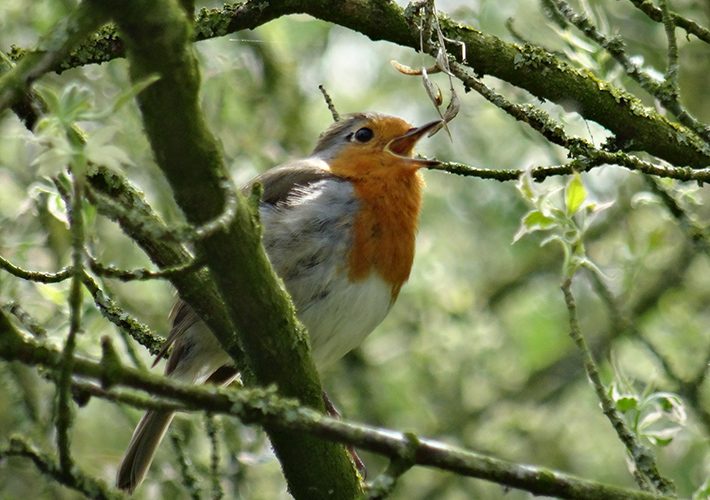
Through consideration of biotopes, you can affect the attraction on birds and other animals that contribute to sonic experiences1. The landscape architect Per Hedfors introduced the term “sonotope”, which can be applied to emphasise the sonic character of biotopes2. Songbirds are generally attracted to basic habitat features, such as access to water, food and sheltering vegetation3,4. Vegetation and water can also produce sound in other ways (cf. Effects of water and Effects of vegetation) To attract birds, vegetation should ideally be dense, varied and in several layers. It could also be beneficial to have older (and dead) vegetation, as there is a correlation between forest stand maturity and bird species diversity5. Sounds of nature are generally perceived as a positive element6 and bird song diversity has been shown to enhance appreciation of urban landscapes further7.
References:
1Dawson, K.J.. Flight, Fancy, and the Garden’s Song. Landscape Journal, 7(2), pp. 170-175, 1998.
2Hedfors, P.. Site soundscapes : landscape architecture in the light of sound. Diss. Uppsala: SLU, 2003.
3Forman, R.T.T.. Urban ecology : science of cities. Cambridge: Cambridge University Press, 2014.
4DeGraaf, R.M.. Trees, shrubs, and vines for attracting birds. Hanover: University Press of New England, 2002.
5Gil-tena, A., Brotons, L. & Saura, S.. Mediterranean forest dynamics and forest bird distribution changes in the late 20th century. Global Change Biology, 15(2), 2009, pp. 474-485.
6Axelsson, Ö., Nilsson, M.E. & Berglund, B.. A principal components model of soundscape perception. The Journal of the Acoustical Society of America, 128(5), 2010, pp. 2836-2846
7Hedblom, M., Heyman, E., Antonsson, H. & Gunnarsson, B.. Bird song diversity influences young people’s appreciation of urban landscapes. Urban Forestry & Urban Greening, 13(3), 2014, pp. 469-474.